
By the Community, for the Community: Co-Creating a Swahili and Somali Bitcoin Glossary in Nairobi
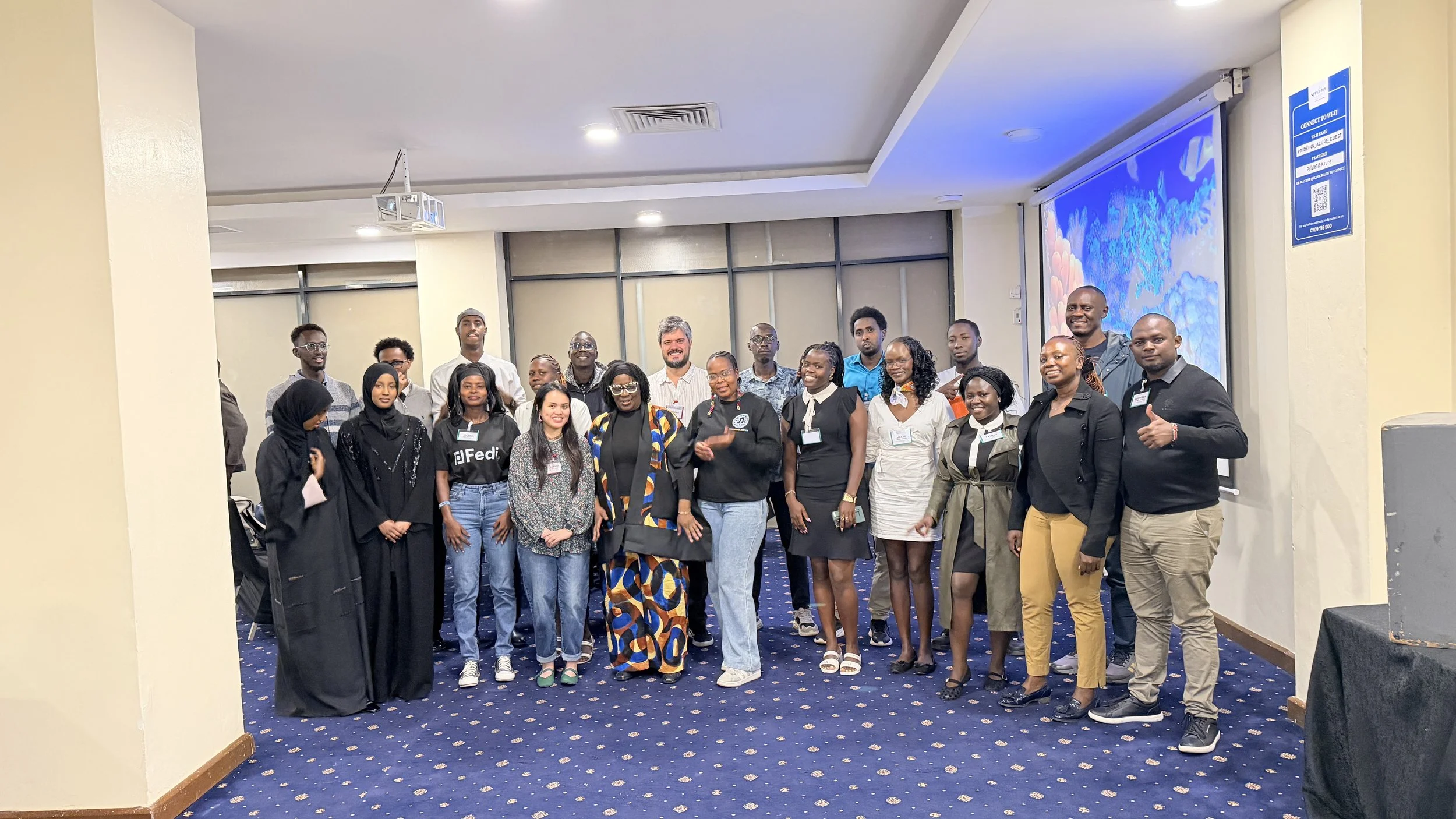
Swahili and Somali participants at the Bitcoin Glossary Localization Sprint in Nairobi, Kenya (June 2026)
The atmosphere in Nairobi, Kenya, was electric from June 18–19th, 2026, as a diverse and passionate cohort gathered for an intensive Bitcoin Glossary Localization Sprint. Much like a fast-paced hackathon but focused entirely on language, a localization sprint brings together people from different backgrounds to translate, adapt, and culturally contextualize critical tools and resources.
When technology is only available in dominant global languages, it leaves major gaps in accessibility, cultural relevance, and trust. By breaking down these linguistic barriers, communities are empowered to take control of their digital and financial tools. In Nairobi, the mission was clear: create and unify safety-critical Bitcoin terms in native languages to pave the way for flawless developer integration, train local software reviewers, and build an open-access technical glossary that global software projects can seamlessly adopt.
A Powerhouse Cohort: High Turnout in Nairobi
The success of any sprint relies heavily on the people in the room, and Nairobi delivered an exceptional turnout. The event saw high participation with 14 Swahili participants and 10 Somali participants collaborating intensely over the two-day period.
This dynamic group was far from uniform; it comprised an interdisciplinary mix of:
Linguists and language educators bringing deep grammatical and structural expertise.
Students and journalists capturing the pulse of modern communication and media outreach.
Digital rights advocates focused on privacy and user safety.
Bitcoin educators and community builders anchoring the technical accuracy of the peer-to-peer financial ecosystem.
The event kicked off with the Card Match community-building exercise. Each participant was assigned a card with a sticker to match with a peer, breaking the group into pairs. Partners then interviewed each other before introducing one another to the wider group, mapping out their organizations, areas of work, and their interests. This established a collaborative foundation across the language teams.
Why Localizing Bitcoin is High-Stakes
"In mainstream application interfaces, a poor translation causes minor confusion. In a Bitcoin wallet, mistranslating safety-critical words (such as recovery seeds, backup phrases, and network fees) results in direct, irreversible loss of capital."
Unlike standard software where a bad translation is merely an inconvenience, Bitcoin localization has a zero-tolerance policy for financial loss. A major focus of the sprint was navigating unique linguistic hurdles, such as the "No Existing Word" problem (creating cryptographic neologisms) and the "Scammer Word" problem (deliberately bypassing localized vernacular commonly associated with financial fraud).
The teams spent considerable effort analyzing safety-critical terms where a single misunderstanding could lead to a permanent loss of funds:
Seed Phrase / Recovery Phrase
Passphrase
Private Key
Custodial vs. Non-Custodial Wallets
Backup / Restore Wallet
One Somali participant highlighted this exact tension:
"I think the technical jargon of some terms, like the Seed in Seed Phrase... you'll just end up understanding what Seed and Phrase mean separately, but not the exact term of the Seed Phrase. So having to explain it in Somali as a description would help, but you have to leave Seed Phrase as it is for someone to know it's jargon, and that it's not the normal seed that people plant or something like that."
Inside the Glossary Sheets: The Process
A glossary acts as a specialized "mini-dictionary" that saves time, enforces consistency, and reduces operational risks for developers. To build a high-quality glossary entry that is easy to understand, technically accurate, reusable, and risk-mitigating, the Swahili and Somali teams worked out of dedicated spreadsheet modules using a strict, consensus-driven workflow.
We broke the intense two-day sprint into focused sessions to keep everyone fresh and aligned. Together, the group defined and explained roughly 360 terms—covering everything from core infrastructure and the Lightning Network to wallet layouts and mobile money integrations.
Every single decision had to pass a rigorous linguistic and technical checklist. Teams repeatedly had to acknowledge the physical limitations of tech interfaces while staying true to the descriptive, poetic nature of native African languages. This structural challenge requires developers and localizers to communicate actively, as one participant noted:
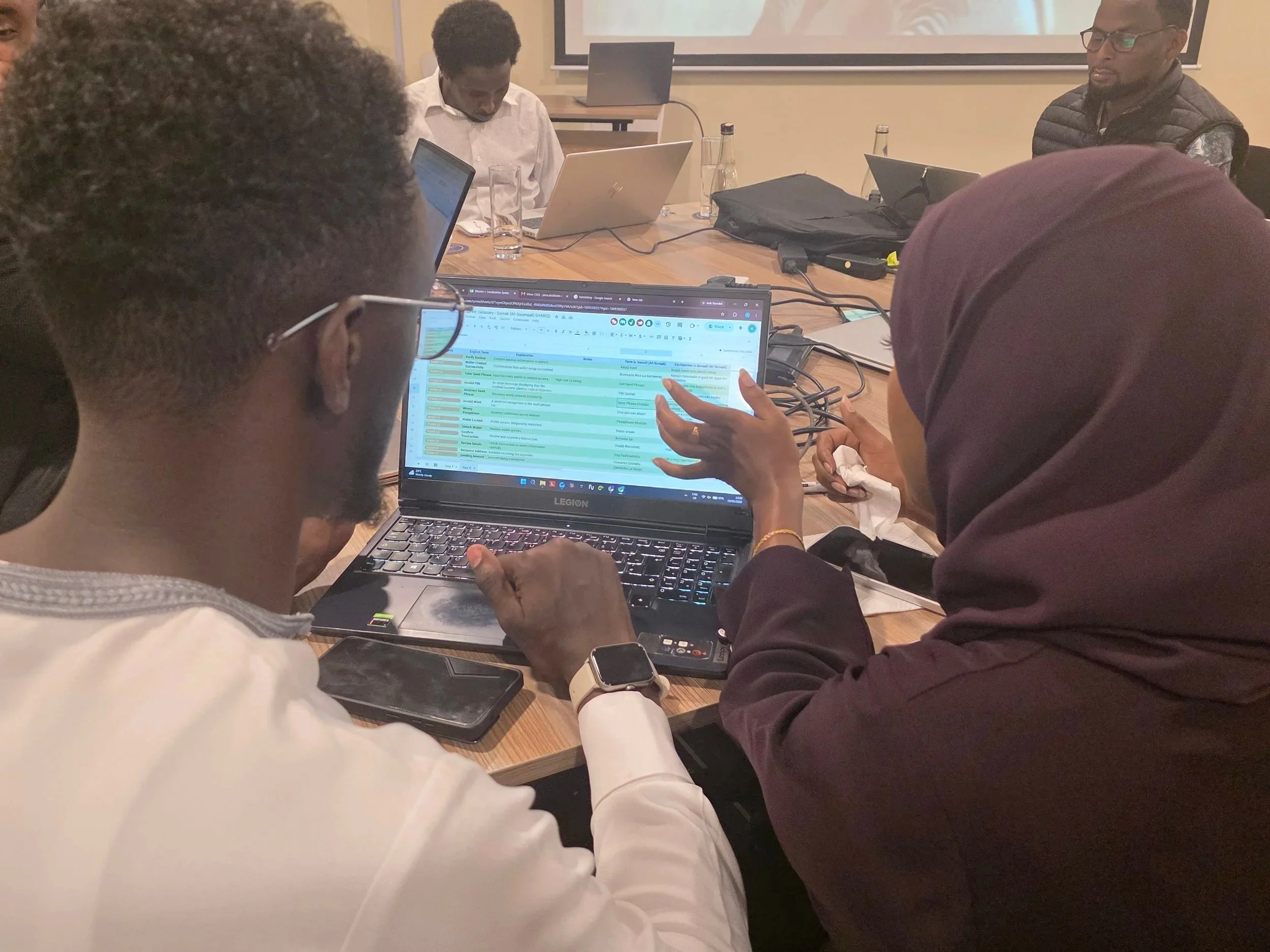
Somali participants working through the glossary
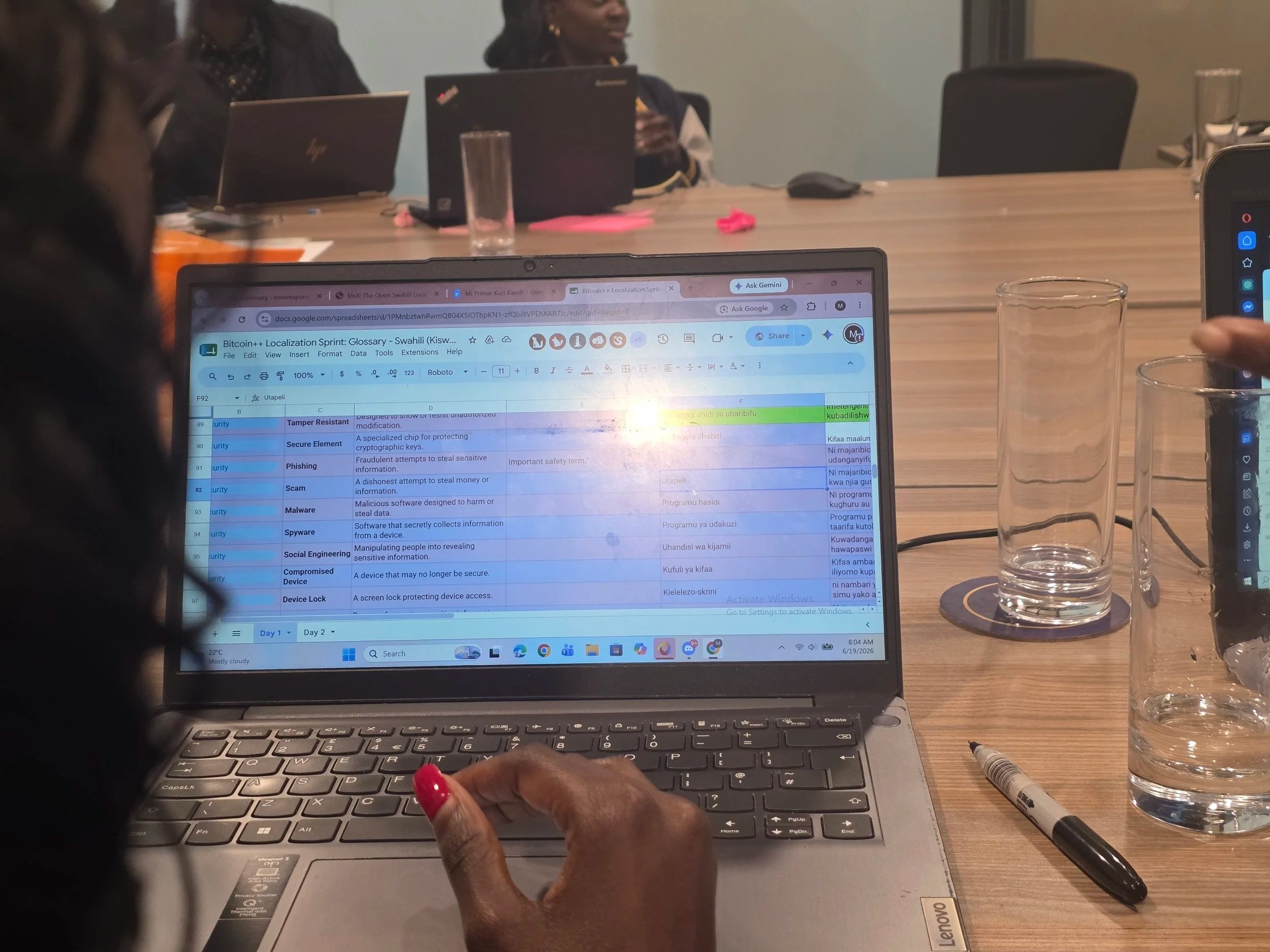
Swahili participant reviewing translated terms and explanations
"Don't be afraid to seek out the tool developer and say, look, this is how our language works. This is how we would explain this particular phrase. Can you make sure your user interface makes consideration so that this works well in our language too?"
Furthermore, both teams discovered that sometimes the most precise solution was realizing that direct translations shouldn't be forced at all. A Swahili participant explained their team's realization:
"For Swahili, we noticed some technical terms. We were arguing. We were feeling like it should be translated, but translating it means a different thing. And so we had to leave them in English, most of them. So basically, just try to acknowledge that sometimes the words just don't exist for it. And it's easier to explain in English."
However, the cohort viewed this as a snapshot of an evolving linguistic landscape rather than a permanent barrier. Another Swahili contributor pointed out that tech vocabulary is constantly shifting, drawing a parallel to newer technological eras:
"Maybe those technical words that we are leaving them like the way they are now, they might be translated later. There might be a word to come. Like, you see, like, the term like AI, when it first came, it didn't have the translation. Then we got Akili Bandiya, right? Now it's Akili Unde."
Only after a thorough debate between translators and reviewers was a final consensus-driven decision recorded.
What’s Next for the Community?
The Nairobi sprint proved that localization goes far beyond just translating words—it is about community empowerment, digital literacy, and building trust across applications.
By compiling these open-access technical glossaries, the Swahili and Somali language communities have cut down localization setup times for external development teams by more than half, ensuring future wallet interfaces are flawless and secure. The momentum won't stop here; localized resources will continue to be refined, published, and utilized to foster an inclusive financial future across East Africa.